Request a Quote
Tell us about your tempered glass requirements
Tempered Glass Manufacturer
Tempered glass is 4-5 times stronger and safer than regular glass, making it ideal for buildings, interiors, and safety-critical applications. Our advanced manufacturing ensures every panel meets strict international standards for strength, clarity, and safety.

Why Choose Us as Your Tempered Glass Manufacturer
Proven Expertise
25+ years specializing in architectural glass for curtain wall and building projects worldwide
Advanced Technology
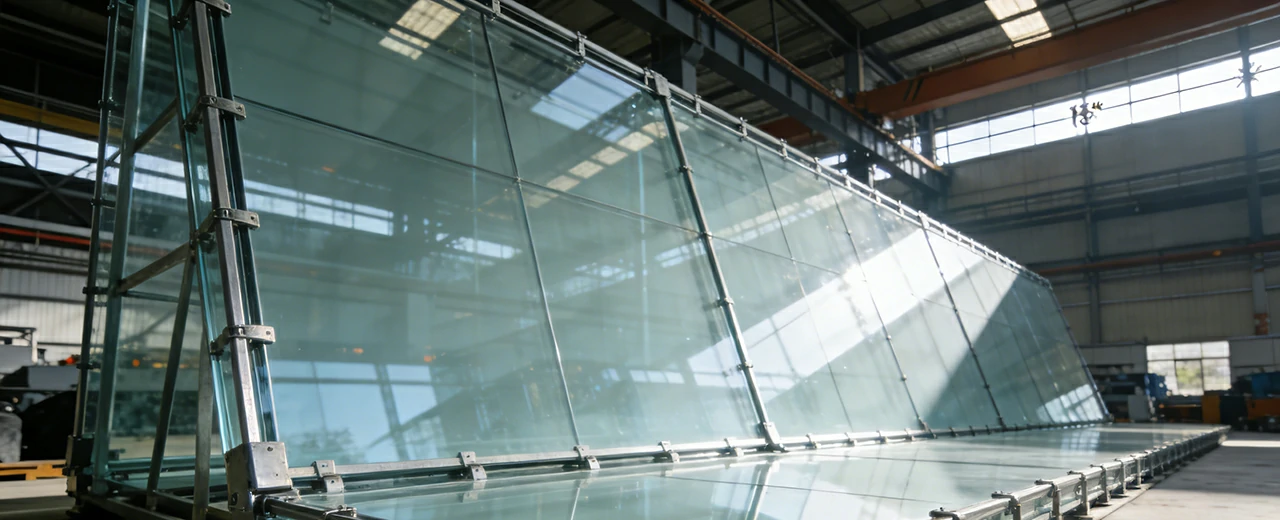
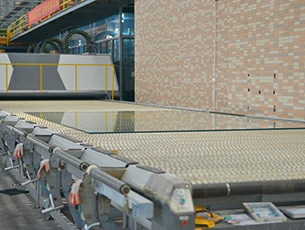
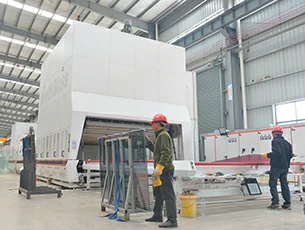
Jinggong flat & LandGlass curved tempering furnaces handling panels up to 18m
Strict Quality Control
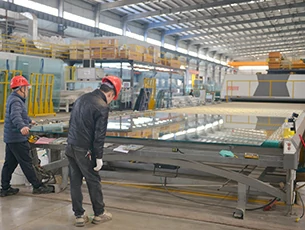
ISO 9001 certified with full inspection at every stage — flatness, stress, and fragmentation testing
Custom Solutions
Any size, shape, color, edge treatment, or coating combination tailored to your project
Fast Turnaround
Stable production capacity with clear timelines and milestone updates throughout
Global Supply
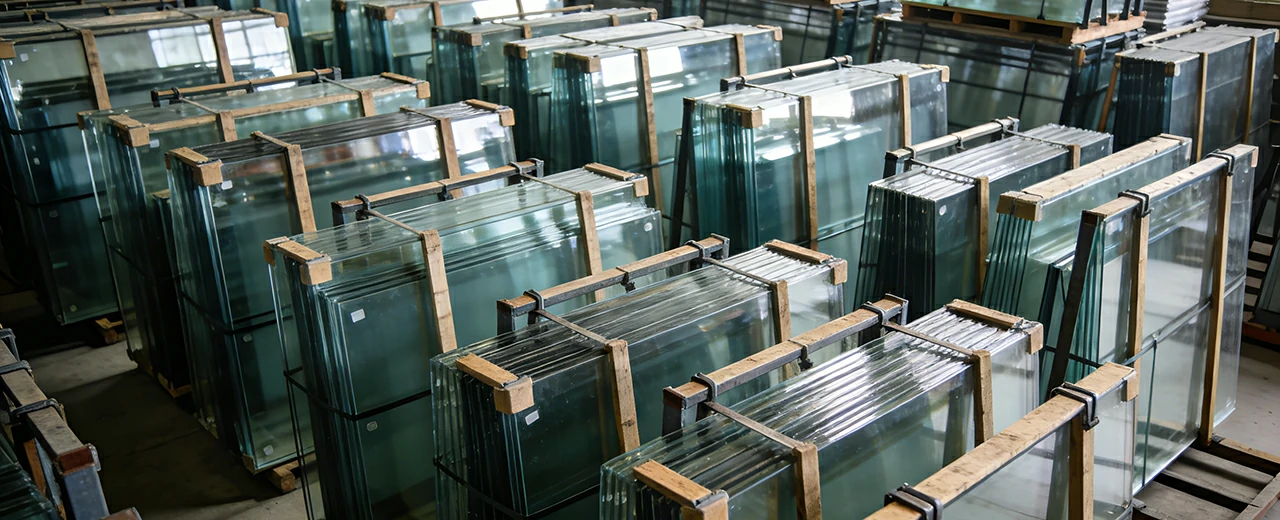
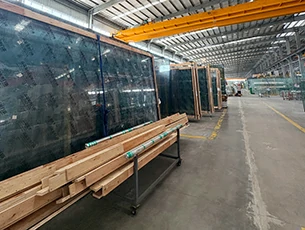
Export to 80+ countries with professional wooden crate packing and container loading
Looking for Premium Tempered Glass for Your Project?
We offer full customization to meet your exact specifications
Size
Custom dimensions up to 18,000 × 3,300mm
Edge Treatment
Flat polished, beveled, pencil, seamed, or mitered edges
Shape
Rectangle, circle, irregular, cut-outs, notches, drilling
Color
Clear, ultra-clear, grey, bronze, green, blue tinted
Surface
Silk-screen printing, acid-etched, frosted, sandblasted
Laminated Options
PVB or SGP interlayer combinations for enhanced safety
How We Test the Quality of Our Tempered Glass
Fragmentation Test
Ensures glass breaks into small, safe granules per EN 12150 / ASTM C1048 standards
Flatness Measurement
Laser-calibrated surface flatness check for optical clarity and installation precision
Stress Test (Polariscope)
Verifies uniform tempering stress distribution across every panel
Impact Resistance Test
Drop ball and pendulum testing to confirm safety rating under impact load
Thermal Shock Test
Temperature differential testing to validate resistance up to 250°C
Dimensional Inspection
Precise measurement of thickness, size, holes, notches, and edge quality
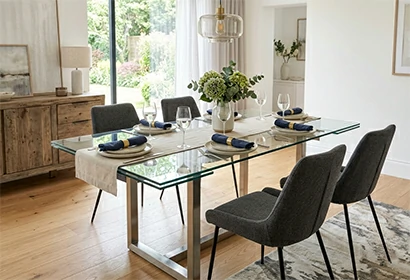
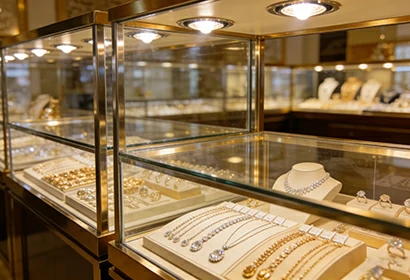
Tempered Glass Uses
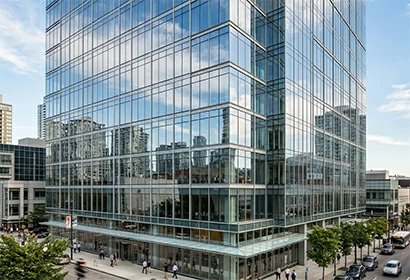
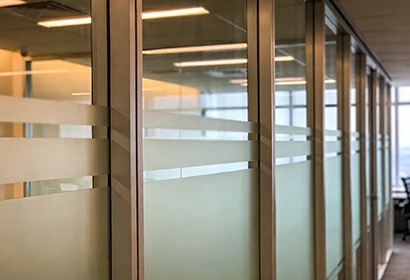
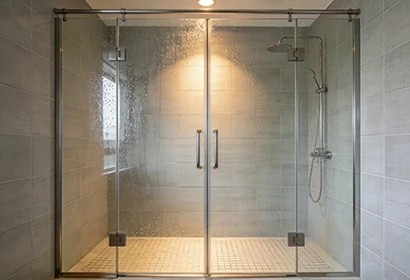
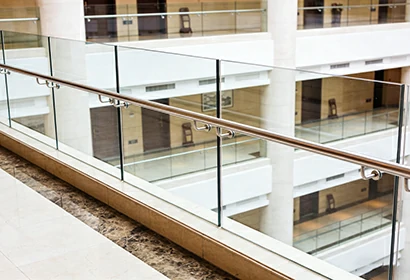
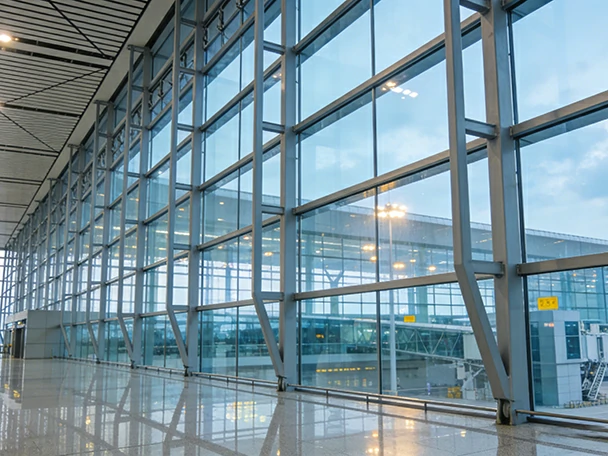
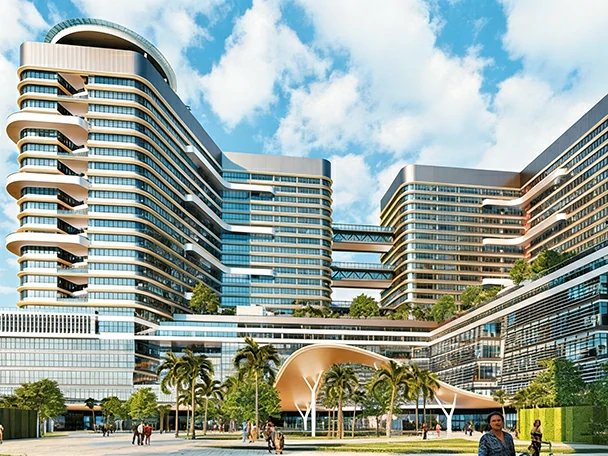
Projects Using Our Tempered Glass
Simple 5-Step Process
Inquiry
Quotation
Production
Inspection
Shipping
What Is Tempered Glass?
Tempered glass (also called toughened glass) is a type of safety glass that has been processed by controlled thermal treatments to increase its strength. During manufacturing, float glass is heated to approximately 620°C and then rapidly cooled (quenched), creating compressive stresses on the surface and tensile stresses in the interior.
This process makes tempered glass 4-5 times stronger than regular annealed glass of the same thickness. When broken, it shatters into small, relatively harmless granular pieces instead of sharp jagged shards — significantly reducing the risk of injury.
Benefits of Tempered Glass
Enhanced Safety
Shatters into small granules instead of sharp shards
Superior Strength
4-5x stronger than regular annealed glass
Thermal Resistance
Withstands temperature differentials up to 250°C
Impact Protection
Resists impact from wind load, debris, and human contact
Design Flexibility
Available in any color, shape, size, and coating
Low Maintenance
Durable surface resists scratching and is easy to clean
Tempered Glass vs Regular Glass
| Property | Tempered Glass | Regular (Annealed) Glass |
|---|---|---|
| Strength (bending) | 120–200 MPa | 30–50 MPa |
| Break Behavior | Small safe granules | Large sharp shards |
| Thermal Shock | Up to 250°C differential | Up to 40°C differential |
| Impact Protection | High — passes drop ball test | Low — breaks easily |
| Post-Breakage Integrity | Crumbles entirely | Stays in frame (dangerous) |
| Construction Code | Required for safety glazing | Not permitted in safety areas |
| Acoustic Performance | Same as thickness equivalent | Same as thickness equivalent |
| UV/Solar Control | Requires coating (Low-E) | Requires coating (Low-E) |
| Security/Forced Entry | Moderate (combine with laminated) | Very low |
| Spontaneous Break (NiS) | Rare risk — use HST to eliminate | No risk |
| Cutting After Tempering | Not possible | Can be cut |
| Optical Effects | Slight quench marks possible | No distortion |
| Cost & Lead Time | Higher cost, requires processing | Lower cost, available immediately |
| Typical Uses | Facades, doors, railings, showers | Interior windows, picture frames |
| Best Hybrid | Tempered + Laminated (safety glazing) | Annealed + Laminated (basic safety) |
FAQs About Tempered Glass
What is tempered glass and how is it made?
Tempered glass is a safety glass made by heating regular float glass to ~620°C and rapidly cooling it. This creates surface compression that makes it 4-5x stronger than annealed glass. When broken, it crumbles into small, blunt pieces rather than dangerous shards.
Why is tempered glass considered safer than regular glass?
When tempered glass breaks, it fragments into thousands of small, relatively harmless granular pieces instead of large, sharp shards. This dramatically reduces the risk of injury, which is why building codes require it in doors, shower enclosures, railings, and any area where human impact is possible.
Where is building code likely to require tempered glass?
Most international building codes (IBC, EN, AS/NZS) require tempered or safety glass in: doors and sidelights, glass within 600mm of a door, shower/bath enclosures, glass railings and balustrades, overhead glazing, and any glass below 800mm from floor level.
Can tempered glass withstand thermal shocks and high heat?
Yes. Tempered glass can handle temperature differentials up to approximately 250°C (compared to only ~40°C for regular glass). This makes it suitable for applications near heat sources, kitchen splashbacks, oven doors, and facades exposed to direct sunlight.
Is tempered glass suitable for safety-critical applications?
Absolutely. Tempered glass meets safety glazing standards (EN 12150, ASTM C1048, AS/NZS 2208) and is widely used in curtain walls, commercial facades, automotive windows, fire-rated assemblies (when combined with intumescent layers), and structural glazing systems.
Client Testimonials
"LIYUAN delivered 5,000㎡ of tempered glass for our mall project on time with zero breakage. Their quality control is excellent and communication is always responsive."
"We have been working with LIYUAN for 3 years. Their tempered glass consistently meets our specifications and their engineering team provides valuable technical support."
"The custom curved tempered glass they produced for our hotel facade was impressive. Great price, reliable delivery, and the glass quality exceeded our expectations."
Request a Quote for Tempered Glass
Fill in your requirements and our team will respond within 24 hours